



























MEMHREP Supports Abandoned Mental Health Patients with Financial Aid and Food


News Desk report
(Odopa2@gmail.com)
More than 500 mental health patients living on the streets across the Ejisu Municipality on Wednesday received food and financial support through a nationwide humanitarian outreach spearheaded by the Mensah Mental Health Rehabilitation Project (MEMHREP).
As part of the intervention, bowls of cooked food were distributed to mental health patients in several communities nationwide—many of whom have been abandoned by relatives and pushed to the margins of society due to stigma.
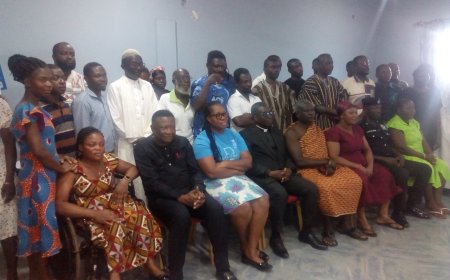
On the same day, executives of MEMHREP donated an undisclosed sum of money to recovered mental health patients and others still undergoing treatment at the Sompa Mensah Medical Center at Ekyem Aboagye Estate.
In the Ejisu Municipality, health personnel of the project took to the streets in the early hours, feeding patients and engaging them in warm, compassionate interactions aimed at restoring their sense of dignity and belonging.
Established in 2011, MEMHREP has remained at the forefront of mental health care in Ghana, providing education, outreach, community support, alcohol and drug detoxification, rehabilitation, and resettlement services.
Describing the exercise, the General Manager of MEMHREP explained that the outreach forms part of the project’s routine humanitarian activities.
“Many mental health patients are abandoned by their own families because of stigma. That neglect is not right and only worsens their condition,” she said.“They deserve love, care, and dignity like everyone else.”
Mary Mensah further emphasized that neglecting persons with mental illness deepens their suffering, noting that for over 14 years MEMHREP has consistently supported patients through feeding, medication, financial assistance, clothing, spiritual care, and rehabilitation services.
Administrator of the Sompa Mensah Medical Center, Hanna Adjei, disclosed that mental health treatment is extremely expensive, particularly with the rising cost of medication. She appealed to philanthropists both locally and abroad to support the life-saving work of the project.
She also called for free mental health services, including medication, and the provision of risk allowances for caregivers who work under difficult and sometimes dangerous conditions.
The Ejisu Municipal Mental Health Coordinator, Millicent Nyamekye, described MEMHREP as a “lifeline” to many patients since its inception and urged philanthropists and corporate institutions to support efforts to expand its reach.
Meanwhile, the Chief Executive Officer of MEMHREP, Adu-Gyamfi, announced plans to establish a 500-bed ultra-modern mental health rehabilitation centre at Asante Juaben in the Ejisu Municipality to address the country’s growing mental health needs.
Upon completion, he noted, the facility will provide accommodation and treatment for persons with mental health conditions, alongside resettlement and reintegration support, including vocational training to equip beneficiaries with employable skills for independent living.
According to him, the proposed facility will comprise 500 cluster beds, a conference centre, a resettlement and vocational training complex with workshops and apprenticeship units, a mosque, a chapel, a fully equipped clinic, and a modern waste management plant.
Sharing his experience, Isaac Osei, a beneficiary who was once abandoned by relatives, said MEMHREP stepped in when all hope was lost. “Today my condition is better. I work as a shoemaker, and I am grateful,” he said.
Another beneficiary, 26-year-old Joseph Addai, also testified that the medical support he receives from MEMHREP has significantly improved his condition.
More than 500 mental health patients living on the streets across the Ejisu Municipality on Wednesday received food and financial support through a nationwide humanitarian outreach spearheaded by the Mensah Mental Health Rehabilitation Project (MEMHREP).
As part of the intervention, bowls of cooked food were distributed to mental health patients in several communities nationwide—many of whom have been abandoned by relatives and pushed to the margins of society due to stigma.
On the same day, executives of MEMHREP donated an undisclosed sum of money to recovered mental health patients and others still undergoing treatment at the Sompa Mensah Medical Center at Ekyem Aboagye Estate.
In the Ejisu Municipality, health personnel of the project took to the streets in the early hours, feeding patients and engaging them in warm, compassionate interactions aimed at restoring their sense of dignity and belonging.
Established in 2011, MEMHREP has remained at the forefront of mental health care in Ghana, providing education, outreach, community support, alcohol and drug detoxification, rehabilitation, and resettlement services.
Describing the exercise, the General Manager of MEMHREP explained that the outreach forms part of the project’s routine humanitarian activities.
“Many mental health patients are abandoned by their own families because of stigma. That neglect is not right and only worsens their condition,” she said.“They deserve love, care, and dignity like everyone else.”
Mary Mensah further emphasized that neglecting persons with mental illness deepens their suffering, noting that for over 14 years MEMHREP has consistently supported patients through feeding, medication, financial assistance, clothing, spiritual care, and rehabilitation services.
Administrator of the Sompa Mensah Medical Center, Hanna Adjei, disclosed that mental health treatment is extremely expensive, particularly with the rising cost of medication. She appealed to philanthropists both locally and abroad to support the life-saving work of the project.
She also called for free mental health services, including medication, and the provision of risk allowances for caregivers who work under difficult and sometimes dangerous conditions.
The Ejisu Municipal Mental Health Coordinator, Millicent Nyamekye, described MEMHREP as a “lifeline” to many patients since its inception and urged philanthropists and corporate institutions to support efforts to expand its reach.
Meanwhile, the Chief Executive Officer of MEMHREP, Adu-Gyamfi, announced plans to establish a 500-bed ultra-modern mental health rehabilitation centre at Asante Juaben in the Ejisu Municipality to address the country’s growing mental health needs.
Upon completion, he noted, the facility will provide accommodation and treatment for persons with mental health conditions, alongside resettlement and reintegration support, including vocational training to equip beneficiaries with employable skills for independent living.
According to him, the proposed facility will comprise 500 cluster beds, a conference centre, a resettlement and vocational training complex with workshops and apprenticeship units, a mosque, a chapel, a fully equipped clinic, and a modern waste management plant.
Sharing his experience, Isaac Osei, a beneficiary who was once abandoned by relatives, said MEMHREP stepped in when all hope was lost. “Today my condition is better. I work as a shoemaker, and I am grateful,” he said.
Another beneficiary, 26-year-old Joseph Addai, also testified that the medical support he receives from MEMHREP has significantly improved his condition.


What's Your Reaction?